Thinking about buying acreage in Copperopolis? It can be an exciting move, whether you want more privacy, room for hobbies, a second-home retreat, or land for future plans. But in a rural market, the details matter, and what looks simple on a listing can involve zoning, utilities, access, and fire-safety rules that change from parcel to parcel. This guide will help you understand what to look for so you can make a more confident decision. Let’s dive in.
What acreage means in Copperopolis
In Copperopolis, “acreage” can mean a lot of different things. Current land listings show everything from smaller parcels under one acre to very large tracts over 100 acres, with examples reaching 2,579.9 acres. That wide range matters because the buying process for a view lot is very different from the process for a ranch-style parcel.
Calaveras County zoning helps explain that variety. The Rural Residential zone is meant for large-lot homes in a rural setting, while ranching, agriculture, or farming are generally accessory and primarily personal uses there. The Residential Agriculture zone is geared more toward small-scale and personal-scale farming or ranching along with larger residential parcels.
County standards also show that lot size expectations can vary by zone. Rural Residential is generally one acre, with some half-acre exceptions under a community or special plan, while A1 zoning is set at 20 acres per dwelling unit. If you are comparing parcels, the acreage number alone does not tell the full story.
Copperopolis’s adopted community plan also points to the bigger picture. The area is intended to retain its rural identity, open space, and natural beauty while supporting residential, commercial, and recreational uses. That means buyers are often choosing not just a home site, but a foothill lifestyle shaped by land, space, and long-term planning.
Why parcel research matters
A rural property can look perfect online and still come with important limits. Two parcels that appear similar in price or size may have very different utility access, road conditions, slope challenges, and permitted uses. That is why early due diligence is so important in Copperopolis.
When you buy acreage, you are not only evaluating the land you can see. You are also evaluating legal access, development potential, ongoing maintenance responsibilities, and county requirements that may affect how you use the property. A careful review upfront can save you time, money, and frustration later.
Check utilities before you offer
Utilities are one of the biggest differences between rural properties. Calaveras County Water District provides water service to more than 13,000 residential and commercial customers and sewer service to about 5,000 customers countywide, and its billing procedures include Copperopolis-area cycles. Even so, many rural areas in Calaveras County still rely on private wells and septic systems.
That means you should verify each service parcel by parcel. A nearby property may have public water and sewer, while the one you want may depend on a private system. Never assume utility availability based on proximity alone.
Questions to ask about utilities
- Is the parcel connected to public water, public sewer, a private well, or a septic system?
- If there is a well, was it properly permitted through the county?
- If there is a septic system, was it permitted and approved?
- Is electricity available at the site, and what will it take to connect?
- What internet or telecom service is available for the property?
County guidance also notes that permits are required for new well construction and onsite wastewater systems. These rules are in place to protect public health and groundwater, so they are not small technicalities. They are central to whether a parcel fits your budget and goals.
County emergency-preparedness information identifies PG&E as the primary electricity provider in Calaveras County and lists telecom providers such as CalTel and Conifer Communications. For many buyers, especially those planning full-time living or remote work, power and internet availability deserve the same attention as price and views.
Confirm legal access and road conditions
Access is one of the most important rural-property issues to verify. In Calaveras County, proof of legal access from the nearest public road is required for new construction and site alteration. In other words, a visible driveway or long-used path does not automatically mean the parcel has legal, buildable access.
This is where buyers can run into expensive surprises. A property may feel easy to reach on a showing day, but the legal record, road agreements, or county standards may tell a different story. It is smart to confirm access early rather than after you are emotionally invested.
What to review for access
- Proof of legal access from the nearest public road
- Any road-maintenance agreements or shared-road obligations
- Driveway condition, width, and grade
- Encroachment, grading, or transportation permit issues handled through county public works
Fire-access rules also shape what works on rural land. County regulations say roads should generally provide two 10-foot traffic lanes, one-way roads a 12-foot lane, and driveways at least one 10-foot lane with 14 feet of horizontal clearance and 13.5 feet of vertical clearance. Grades generally may not exceed 16% without approval.
Those standards matter because access is not just about convenience. It is also about whether emergency vehicles can reach the property safely. If you are looking at a long or steep driveway, that should trigger a closer review.
Understand slopes and usable land
A large parcel does not always equal a large usable building area. In foothill markets like Copperopolis, slope, setbacks, fire requirements, and access can reduce how much of the land is practical for a home, shop, barn, or other improvements. This is especially important when comparing lower-priced parcels that may look attractive on a per-acre basis.
Calaveras County notes that residential development on slopes of 50% or more may require larger lots, alternate access, engineered site plans, soil stabilization, erosion control, or even permit denial until safety requirements are met. That means gross acreage and usable acreage can be very different numbers.
Why slope affects value
- Site work may cost more
- Engineering requirements may increase
- Access can become more difficult
- Building placement may be limited
- Future improvements may require extra review
If your goal is to build, store equipment, add outbuildings, or create outdoor living space, the shape and function of the parcel matter just as much as total acreage.
Review zoning and land-use limits
Zoning is one of the clearest ways to understand what a parcel is meant to support. In Copperopolis and the surrounding Calaveras County area, zoning separates rural residential, agricultural, and working-land uses. That framework can affect whether the land is a fit for your plans now and later.
For example, Rural Residential is intended for large-lot homes in a rural setting, with ranching or farming generally treated as accessory and primarily personal uses. Residential Agriculture is more oriented to small-scale and personal-scale farming or ranching. If you are thinking about animals, gardens, or a more flexible rural setup, those distinctions matter.
The county also identifies the AP zone as tied to Williamson Act contracts. Buyers should ask whether a property is subject to a Williamson Act or agricultural preserve contract and whether that limits use. This is especially important for investors, development-minded buyers, or anyone considering a nontraditional long-term use.
Inspect barns, sheds, and other structures
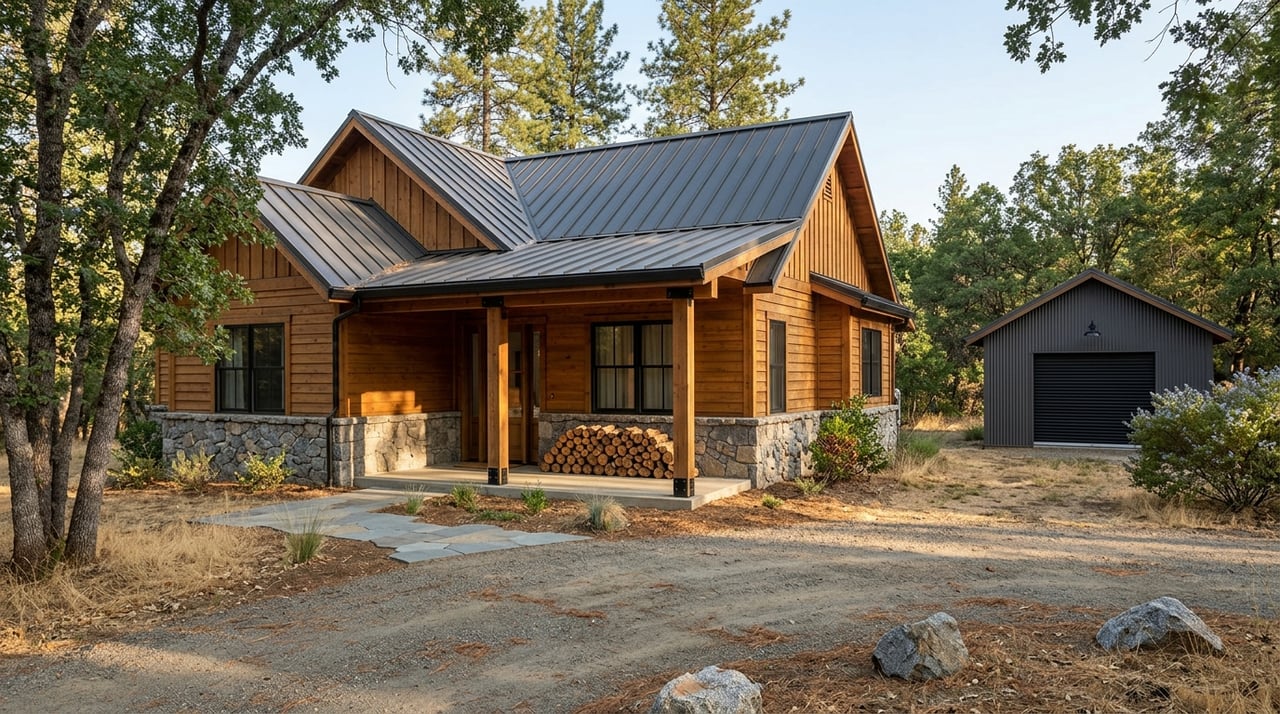
Outbuildings are often part of the appeal of acreage. You may find parcels with detached garages, barns, sheds, shops, or other accessory structures already in place. These can add real value, but only if you understand how they were built, permitted, and legally classified.
Calaveras County states that detached accessory structures cannot be used as dwelling units. The county also says that on a lot without a main use, only limited accessory structures without plumbing or electricity are allowed. That means a barn or shed may not offer the flexibility some buyers assume.
The county’s building fee schedule includes separate permit categories for residential garages, sheds, barns, and agriculture buildings. That is a helpful reminder to confirm whether existing improvements were properly permitted and recorded. If a structure is important to your decision, its permit history should be part of your review.
Factor in wildfire readiness
Wildfire readiness is part of rural homeownership in Copperopolis. CAL FIRE says homeowners should maintain 100 feet of defensible space, and county fire-prevention guidance connects readiness to both defensible space and home hardening. If you are buying acreage, this is not a side issue. It is part of responsible ownership.
Larger parcels may also come with added responsibilities. Calaveras County burn rules show that an air-pollution burn permit is required when a property is 5 acres or more, or when burning is commercial. That does not mean larger land is a problem, but it does mean ownership can involve more active land management.
Wildfire questions to ask
- How much defensible space will need to be maintained?
- Does the driveway meet likely fire-access expectations?
- Is there heavy vegetation near the homesite or access road?
- What routine land-clearing work may be needed?
- Will the parcel size trigger added burn-permit rules?
Make sure the lifestyle fits
Copperopolis has a strong rural identity, and that is part of its appeal. The adopted community plan highlights small-town character, open space, natural beauty, and connections to Lake Tulloch, golf, and outdoor recreation. It also notes the area’s history in cattle grazing and mining, with ranching still active nearby.
For many buyers, that mix is exactly the draw. You may want space, views, and a more private setting while still enjoying the broader Copperopolis lifestyle. But acreage living usually asks more of you than an in-town home, especially when it comes to maintenance, access, utilities, and fire readiness.
A good question to ask yourself is not just, “Do I want land?” It is, “Do I want the responsibilities that come with it?” When the answer is yes, acreage in Copperopolis can be a very rewarding fit.
A smart acreage checklist
Before you move forward on a rural home or land purchase in Copperopolis, focus on these key items:
- Verify zoning and minimum lot standards
- Confirm public utilities versus well and septic
- Check permits for wells, septic, barns, shops, and sheds
- Confirm legal access from the nearest public road
- Review driveway width, grade, and fire-access standards
- Evaluate slope and usable building area
- Ask about road-maintenance obligations
- Check for Williamson Act or agricultural preserve restrictions
- Understand defensible-space and burn-permit responsibilities
When you work through these items early, you put yourself in a much better position to judge true value, not just asking price.
If you are weighing acreage in Copperopolis, local insight can make a big difference. The right property should match your goals, your comfort with rural ownership, and the practical realities of the parcel itself. When you are ready for grounded local guidance on rural homes, land, or lifestyle-focused property in the Sierra Foothills, connect with Kevin Baxter.
FAQs
What should you verify first when buying acreage in Copperopolis?
- Start with zoning, utility setup, legal access, and slope because those factors heavily affect how the property can be used.
Does acreage in Copperopolis always mean a large ranch parcel?
- No. Current listings range from sub-acre lots to very large tracts, so acreage can mean anything from a smaller rural homesite to a true ranch-style property.
Are rural homes in Copperopolis on public water and sewer?
- Some are, but many rural properties in Calaveras County rely on private wells and septic systems, so you need to verify utility service parcel by parcel.
Why does legal access matter for Copperopolis rural property?
- Calaveras County requires proof of legal access from the nearest public road for new construction and site alteration, so visible access alone is not enough.
Can you use a barn or shed as living space on acreage in Calaveras County?
- County rules state that detached accessory structures cannot be used as dwelling units.
How much defensible space do rural homeowners need in Copperopolis?
- CAL FIRE says homeowners should maintain 100 feet of defensible space around the home.
Do larger Copperopolis parcels have extra burn requirements?
- Yes. County burn rules require an air-pollution burn permit for properties of 5 acres or more or for commercial burning.
What zoning questions should you ask about acreage in Copperopolis?
- Ask which zone applies, what minimum lot size standards exist, whether agricultural uses are limited, and whether the parcel is tied to a Williamson Act or agricultural preserve contract.